304 vs 409 Stainless Steel Exhaust Tips: A Buyer's Guide
If you source exhaust tips for resale, private label, or distribution, the first specification decision is material grade. The two dominant options are 304 and 409 stainless steel. Both look identical on a product photo, but they behave very differently after two winters of road salt — and that difference shows up in your return rate and reviews. This guide explains the real-world trade-offs so you can match the grade to your market.
What Actually Differentiates 304 and 409
304 is an austenitic stainless steel containing roughly 18% chromium and 8% nickel. The nickel content is what gives it superior corrosion resistance and that deep, chrome-like mirror shine after polishing. It is non-magnetic in its annealed state, which is why the old 'magnet test' is a quick (if imperfect) field check.
409 is a ferritic stainless steel with about 11% chromium and almost no nickel. It is magnetic, slightly darker in tone, and was originally developed for automotive exhaust systems — it handles heat cycles extremely well. What it does not handle as well is prolonged exposure to moisture and salt on the visible outer surface.
Corrosion Resistance and Service Life
For an exhaust tip — a cosmetic part that lives at the rear of the vehicle, constantly exposed to spray, salt, and condensation — surface corrosion is the failure mode your customers will notice first:
- 304 stainless: resists rust and pitting for many years even in coastal regions and snow-belt markets where roads are salted. Surface staining is rare and usually wipes off.
- 409 stainless: develops surface discoloration (a brownish tint) and light surface rust within 1–2 years in wet or salty climates. The rust is typically cosmetic rather than structural, but consumers read it as 'cheap'.
- In dry, inland climates (much of the Middle East, Central Asia, inland Australia), 409 holds up acceptably and the visual gap narrows significantly.
Appearance Retention After Polishing
Both grades take a mirror polish at the factory. The difference emerges over time: 304 keeps its bright shine with basic washing, while polished 409 gradually dulls and can develop a yellow-brown patina. If your sales channel depends on customers posting photos — and in the aftermarket, it does — 304 protects your brand image far better.
Cost Structure and MOQ
Nickel is the expensive ingredient, so 409 raw material typically costs 30–40% less than 304. On a finished tip, that translates into a meaningful but not dramatic unit price gap, because labor, polishing, and packaging costs are identical. At SUMSOO, MOQ policies are the same for both grades — the choice should be driven by your market positioning, not by minimums.
Which Grade Fits Your Market?
- North America and Northern Europe: choose 304. Winter road salt makes 409 discoloration a warranty-review problem within one season.
- Coastal and island markets: 304 without question — salt air attacks 409 even on garaged vehicles.
- Entry-level e-commerce price points in dry climates: 409 is a legitimate value option. Disclose the material honestly in the listing.
- Premium retail and installer channels: 304 only. Installers remember which brands rusted.
How to Verify Material When Sourcing
- Ask for a material certificate (mill test report) showing the grade — any serious factory provides this per batch.
- The magnet test: 409 is magnetic, 304 is largely non-magnetic, though cold-working (bending, stamping) can induce slight magnetism in 304. Use it as a screening tool, not proof.
- Request salt-spray test data if the supplier claims 304 — reputable factories test to ASTM B117 or equivalent.
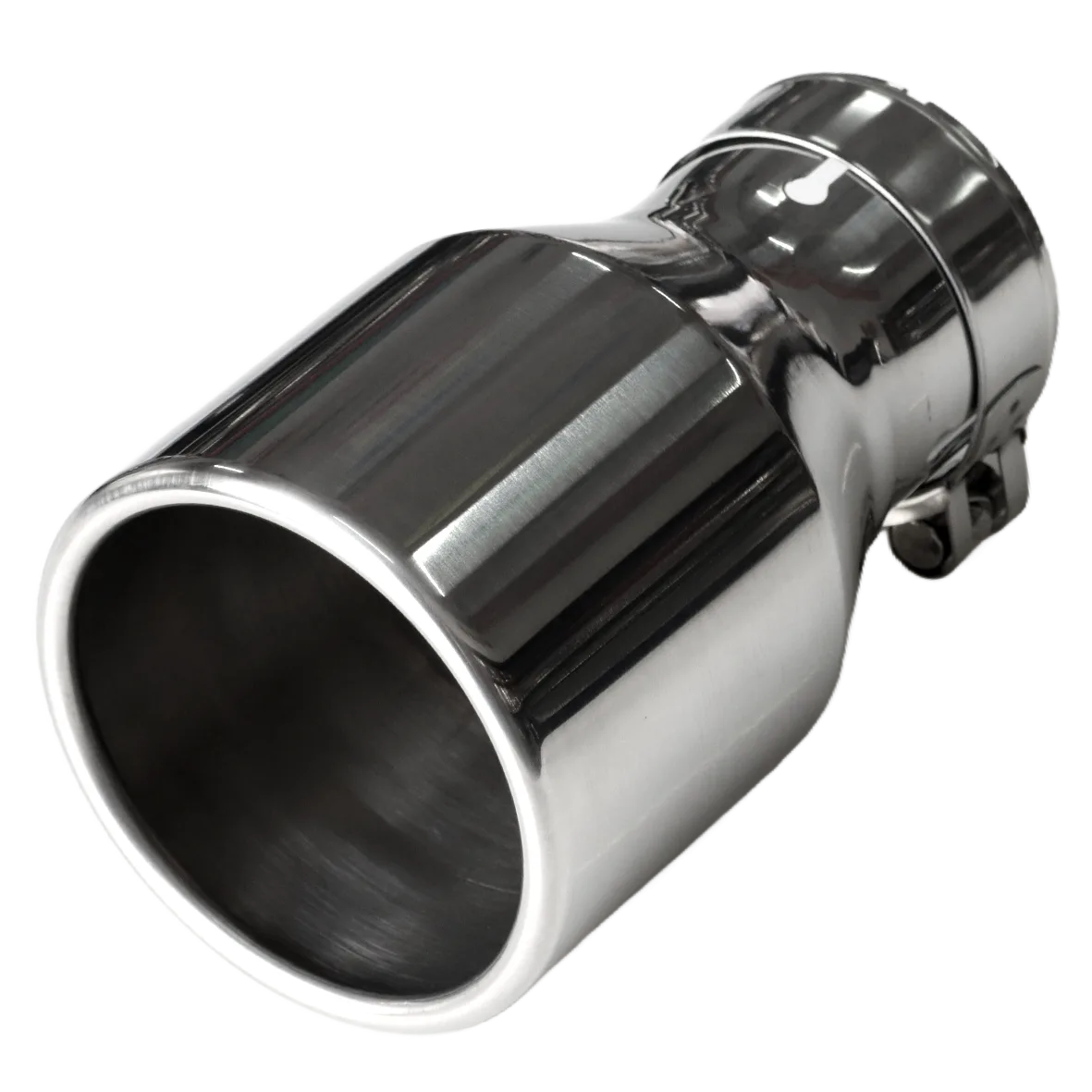
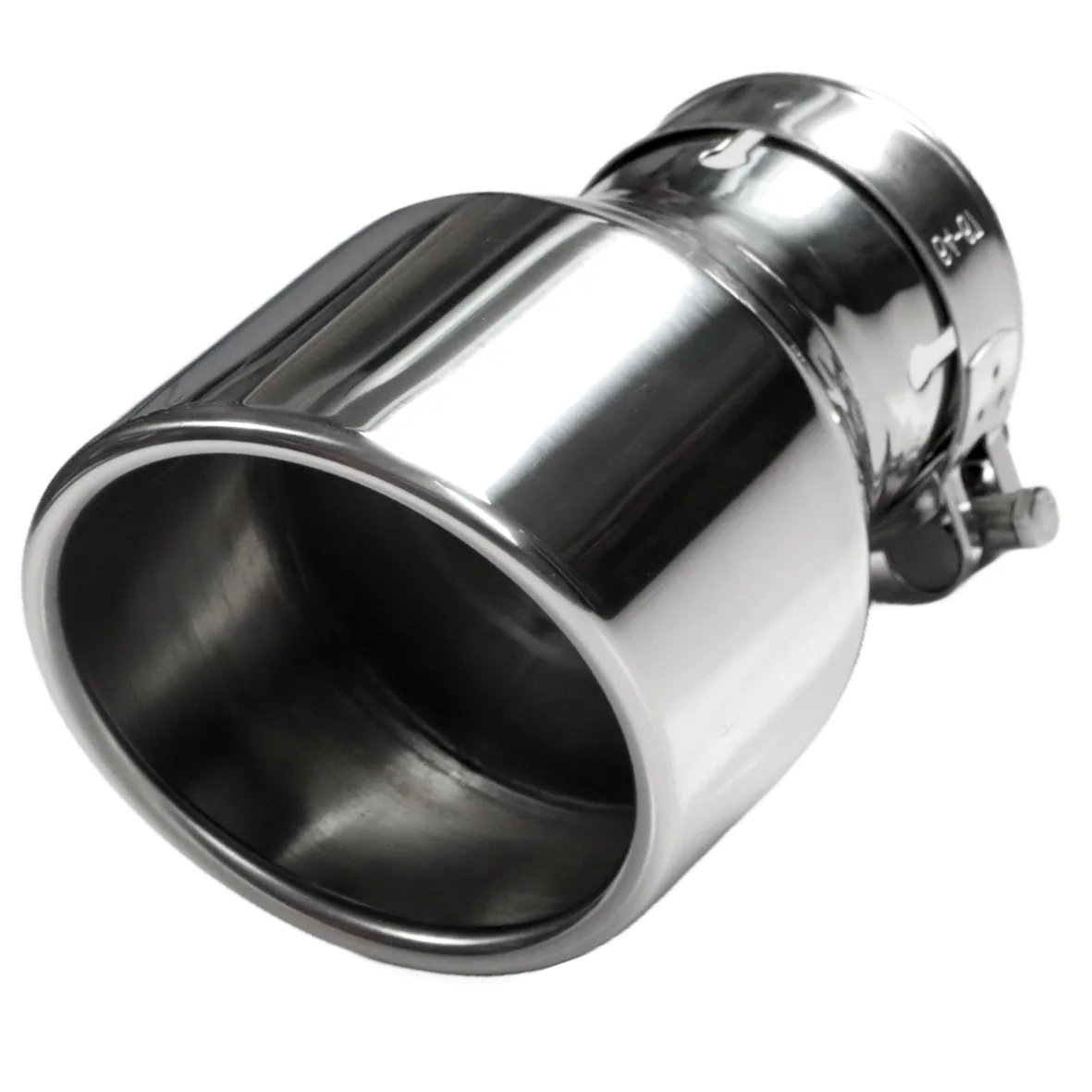
Our stainless steel exhaust tips are available in both grades with material certificates on every batch — see the RX-02-001 mirror-polished stainless tip for a typical 304 specification.
Not sure which grade fits your price point and climate? Send us your target market and retail price band — we will recommend the material, finish, and packaging combination that protects your margin and your reviews.
Need Exhaust Tips for Your Business?
Factory direct pricing, OEM/ODM customization, global shipping. Tell us your requirements.